AI Is Already Closing Deals: What That Means for Your Sales Hiring
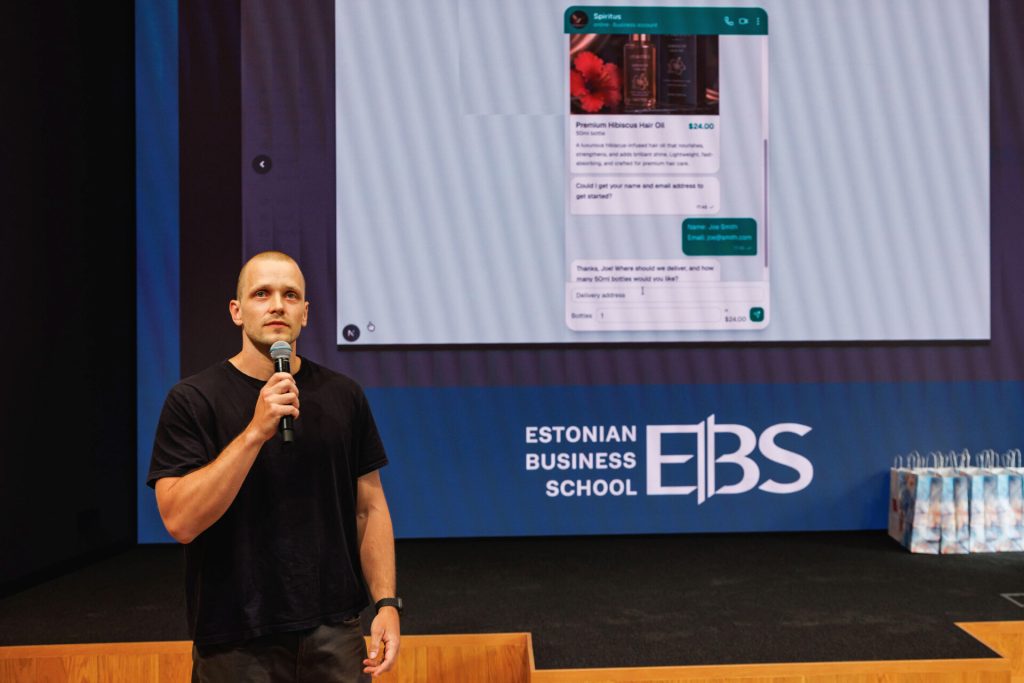
By Siim Kostabi
Most HR conversations about AI still revolve around efficiency. Faster CVs, better screening, smarter scheduling. But something bigger has been happening on the sales floor. AI isn’t just assisting salespeople anymore. It’s replacing the first three conversations entirely.
I saw this firsthand. Last year I built Closer AI, a WhatsApp-based sales agent that runs B2B conversations without a human in the loop. No SDR, no follow-up reminders, no delays. The agent qualifies leads, handles objections, and books calls autonomously. We ran it against traditional outreach and the AI outperformed human reps on initial contact rates. Not because it’s smarter, but because it’s always on, always consistent, and removes every point of friction between interest and conversion.
We’re not unique. A growing number of companies are running some version of this. Which means HR teams are about to face a question they’re not quite prepared for: what does the sales team actually look like now?
The role isn’t disappearing. It’s splitting in two.
The mistake is framing this as job loss. The more accurate picture is that the job is bifurcating. Autonomous agents are absorbing the high-volume, repetitive first-touch work: initial outreach, qualification, FAQ handling. What’s left for human salespeople is the part that requires judgment: complex negotiations, relationship-heavy enterprise deals, situations where trust matters more than speed.
That means hiring criteria need to shift. The SDR who was great at volume and scripts is a different person than the account executive who can navigate a six-month enterprise deal. If AI is doing the former, you’re mostly hiring the latter, and those people are harder to find and more expensive to lose.
What to actually adjust
First, reconsider your SDR pipeline. If you’re hiring BDRs primarily for outbound volume, audit what percentage of that work could be handled by an AI agent. That’s not a reason to immediately cut headcount. It’s a reason to be intentional about what you’re hiring for and why.
Second, rethink onboarding. The skills that made a great rep five years ago, resilience through rejection, scripted persistence, high call volume, matter less when AI handles that layer. Training should weight higher toward stakeholder management, creative deal-making, and reading complex buying committees.
Third, the tools stack is now part of the role description. A sales hire who can work alongside AI tools, interpret their outputs, and step in when the agent hands off is more valuable than one who can’t. Worth screening for explicitly.
The companies getting this right will have smaller, higher-quality sales teams. Lower acquisition costs, better-fit customers, reps who aren’t grinding through 80 cold calls a day and burning out by Q2. The companies that don’t will keep hiring for a job description that no longer matches what the role actually is.
At Pageloot, we serve over 20,000 brands across 110 countries in retail, hospitality, and enterprise. The businesses adapting fastest aren’t the biggest ones. They’re the ones where leadership understood early that AI changes the economics of customer acquisition, not just the tooling.
HR is in a position to get ahead of this. The time to start that conversation is before the restructuring lands on your desk.
Siim Kostabi is co-founder of Pageloot, a QR code platform used by brands including Starbucks and DeLonghi across 110 countries.
Image credit: Rasmus Kooskora