AI Versus the Human Brain
Marcus Mossberger, Chief Market Strategy Officer, LYTIQS
Recently the CEO of Anthropic, Dario Amodei warned that AI could replace 50% of entry-level, white collar jobs within the next few years. Some suggest that 300 million jobs are exposed to AI automation. This week Oracle laid off thousands of employees (reportedly between 20,000 and 30,000, equivalent to almost 18% of Oracle’s workforce) due to the perceived need for capital to fund their AI aspirations. But when you actually compare the capabilities of AI versus the human brain, you quickly realize that it isn’t a fair fight.
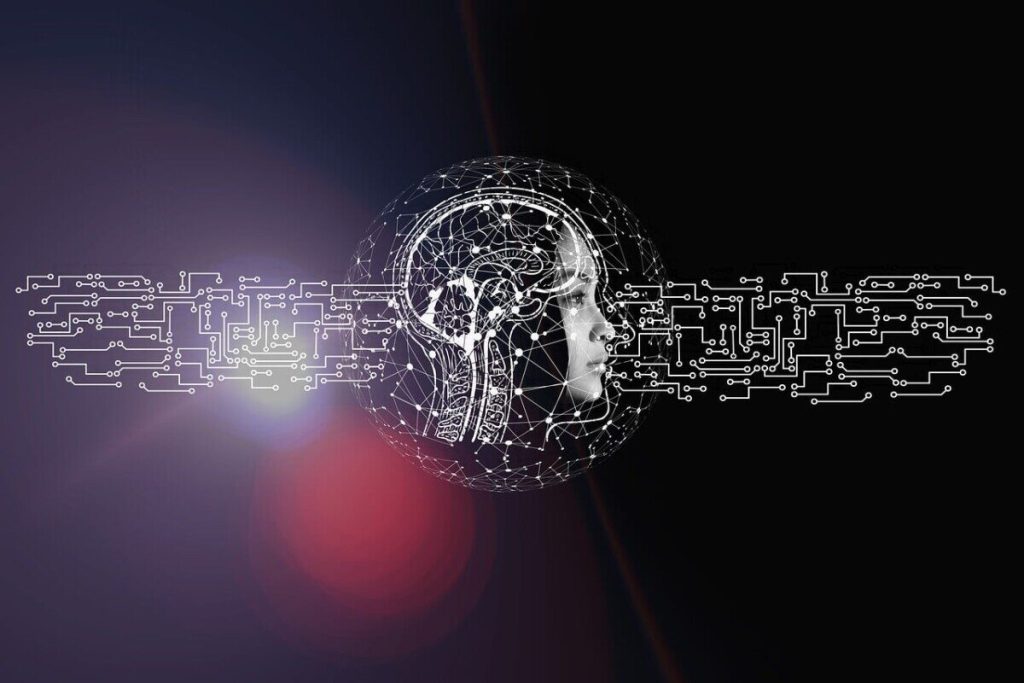
David Eagleman, a neuroscientist, author and technologist at Stanford University has stated, “the brain is the most sophisticated piece of machinery in the known universe.” It’s far more efficient and adaptable than any AI system ever created. The human brain contains an estimated 86 billion neurons, with each neuron forming thousands of connections resulting in quadrillions of synapses. For comparison, there are about 100 billion galaxies in the observable universe. It’s not hyperbole to suggest that the human brain is comparable in scale and complexity to the known universe, and it fits in your head and only requires 20 watts of energy (enough to power a light bulb).
AI on the other hand, requires millions of GPU hours and megawatts of power in order to deliver the answer to relatively simple questions. AI does not actually understand… it correlates and will always have a narrow focus on task-specific requests. And of course, it is famously prone to confidently hallucinate. Geoffrey Hinto, a British-Canadian computer scientist widely known as “the godfather of AI” has stated that, “the brain is still far more efficient than any artificial neural network.” To be fair, AI has the advantage when it comes to speed and scalability, but one of the most important considerations when comparing it with the human brain is the concept of neuroplasticity.
Neuroplasticity, also known as brain plasticity, is our nervous system’s ability to reorganize its structure, functions and neural connections in response to stimuli (ie learning, experience or even injury). In other words, it allows the brain to reshape its architecture and adapt to new experiences – including the ability to prune unused
connections and form new pathways when needed. Emerging AI fields are researching ways to mirror this uniquely human capability through liquid networks, differential plasticity and spiking neural networks.
But ironically, none of this can be accomplished without access to excessive amounts of electricity. The bottleneck is people… namely electricians. A shortage of skilled electricians (over 300k new ones will be needed over the next decade) is prohibiting the expansion of AI as it requires the construction of new data centre’s to power these expanding technologies. While each successive release of new AI models provide us with astounding possibilities, they are also limited by surprisingly simple constraints that humans seem to take for granted. We are in awe of machines that can mimic fragments of intelligence, while underestimating the remarkable people that created them.