Neurodiversity Within Teams & Why Different Thinkers Build Better Businesses
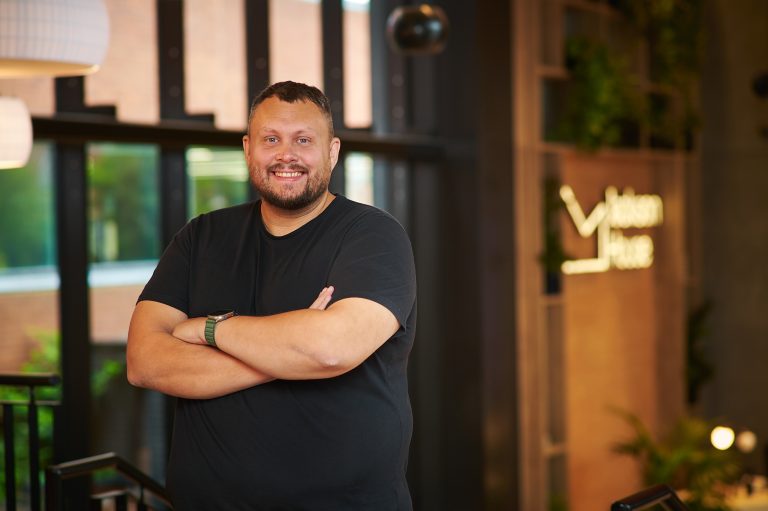
By Adam Herbert, CEO and Co-Founder of Go Live Data
Businesses talk about the importance of building high-performing teams, but too often the focus has been on finding people who fit neatly into an existing culture.
Employers have traditionally looked for candidates who communicate in familiar ways, respond confidently in interviews and appear likely to integrate quickly with colleagues. That approach may feel safe, but it can also produce teams in which people think, challenge and solve problems in broadly similar ways.
In a business environment shaped by rapid technological change, artificial intelligence and increasing commercial uncertainty, that kind of uniformity is becoming a weakness. Organisations need people who can spot patterns others miss, question established assumptions and approach complex problems from different directions. Neurodiversity, therefore, should not be viewed solely through the lens of workplace inclusion. It is also a question of innovation, adaptability and commercial performance.
This subject is particularly relevant to me because my business partner and Go Live Data co-founder, Tim Langley, is autistic. Tim has been a strong advocate for neurodiversity in the workplace and has written on the subject, drawing on both his personal experience and his entrepreneurial career. Working alongside him has given me understanding of the huge value, different ways of thinking can bring to a business.
Tim and I don’t always approach a problem in the same way, and that’s precisely the point. Where one of us may focus first on the commercial opportunity, the other may examine the structure, logic or technical detail behind it. One of us may identify the broad direction while the other challenges whether the underlying assumptions are sound. That difference doesn’t slow a business down when it is managed well. It strengthens the final decision because ideas are tested properly rather than accepted simply because they sound right.
Different thinking is a commercial advantage
Neurodiversity describes the natural variation in the way people process information, communicate and experience the world. It is commonly associated with autism, ADHD and dyslexia, although there isn’t a single neurodivergent profile. People bring different strengths, challenges and working preferences, and employers should be wary of replacing one set of assumptions with another.
The commercial value lies in recognising that businesses benefit from cognitive variety. Some people are highly skilled at identifying patterns or inconsistencies. Others bring intense focus, strong memory, creative problem-solving or an ability to view systems in a less conventional way. These strengths can be particularly valuable in technology, data, product development and operations, where progress often depends on seeing what other people have overlooked.
At Go Live Data, we operate in a sector where accuracy, logic and the ability to interrogate information are critical. We also need commercial imagination, an understanding of customer behaviour and the confidence to challenge established methods. Qualities that are unlikely to come from one type of thinker. Strong businesses are built when analytical, creative, strategic and detail-focused people contribute on equal terms.
The risks of recruiting for familiarity
Many businesses unintentionally screen out neurodivergent candidates before they have had an opportunity to demonstrate their ability. Traditional recruitment processes often placed weight on eye contact, rapid verbal responses, confidence in unfamiliar social situations and the ability to make an immediate personal connection. As many of us in business have learned, none of those things necessarily indicates how well someone will perform in a role.
For example, a candidate may struggle in a conventional interview but excel when asked to complete a practical task. Someone may need more time to process a question but produce a more considered and insightful answer. Others may communicate more effectively in writing than in a pressured face-to-face setting.
When employers rely too heavily on one method of assessment, they risk selecting people who are good at interviews rather than those who are best suited to the work.
The continued emphasis on ‘cultural fit’ can also create problems. In practice, it can become a short-cut for hiring people who feel familiar, share similar backgrounds or communicate in the same way as the existing team. That may create short-term comfort, but it can also lead to what’s known as ‘groupthink.’ Businesses need shared values and professional standards, but they do not need uniform personalities or identical thinking styles.
A more effective approach is to recruit for capability, contribution and values while allowing candidates different ways to demonstrate their strengths. Practical assessments, clearly structured interviews, advance information and precise questions can all help employers make better decisions without lowering standards.
Inclusion does not mean reducing expectations
One of the unhelpful assumptions surrounding neurodiversity is that inclusion requires businesses to make extensive compromises or accept lower performance. It does not. Effective inclusion is about removing unnecessary barriers so that people can perform at their best.
Clearer instructions, defined priorities, quieter working areas, flexible communication methods and more predictable processes are often presented as specialist adjustments. In reality, many of these practices improve performance for entire teams. Poorly defined expectations and constant interruptions are not signs of a demanding workplace; they are signs of weak management.
Good leaders understand that people do not all produce their best work under identical conditions. Some employees think most effectively in discussion, while others need time to consider information before responding. Some prefer broad objectives and autonomy, while others perform better when responsibilities are clearly defined. Managing those differences is not about giving preferential treatment, it’s about getting the best from the people the business has chosen to employ.
Better challenge leads to better decisions
Different thinkers can also improve the quality of decision-making, normally through collaboration, but collaboration shouldn’t be confused with easy agreement. If every proposal is quickly accepted and every meeting ends in consensus, there is a risk that important questions aren’t being asked or answered.
Constructive challenge is essential, particularly in fast-growing companies where decisions can have significant financial and operational consequences. Neurodivergent employees may approach accepted practices with fewer assumptions or may be more willing to question systems that others have learned to tolerate. That perspective can identify inefficiencies, expose weak logic and prevent costly mistakes.
Leaders have a responsibility to create an environment in which challenge is treated as a contribution rather than a threat. That requires psychological safety, but it also requires clarity. People should be able to disagree directly and professionally, knowing that the strength of an idea matters more than the seniority or communication style of the person presenting it.
Neurodiversity belongs in business strategy
Neurodiversity is often placed within HR and diversity and inclusion policies, but its relevance extends far beyond those functions. It should form part of conversations about innovation, leadership, recruitment, customer understanding and long-term growth.
As technology is automating more routine tasks, it means the value of human judgement, curiosity and original thinking will continue to increase. Businesses will need people who can interpret complexity, identify opportunities and challenge the output of systems rather than simply follow them. Teams made up of people who think in the same way will struggle to do that consistently.
Having built Go Live Data alongside an autistic co-founder, I do not see neurodiversity as a corporate initiative or a box to be ticked. I see the practical impact of different thinking in the way we solve problems, test ideas and make decisions. It has reinforced my belief that the strongest businesses are those in which different people are given the confidence, trust and opportunity to contribute fully and openly.
About Adam Herbert
Adam Herbert is the CEO and Co-Founder of Go Live Data, one of the UK’s fastest-growing data and marketing intelligence companies. With over 20 years in the industry, he’s a leading voice in ethical outbound marketing and is known for challenging outdated marketing norms.
Go Live Data
Go Live Data works with some of the biggest names in the corporate world and many SMEs in the UK and overseas. The team provides the cleanest, most accurate B2B data available of 100 million companies, servicing the UK, Ireland, USA, Canada, and UAE territories. This enables highly effective and profitable marketing campaigns to be conducted, leading to growth for their clients. A team of 20 based in Manchester, Go Live Data is pioneering ‘frequency rules’ in the marketing and data industry, which sets itself apart by putting the recipient at the core of everything it does. Unlike the majority of the industry, its data is cleaned every 30 days rather than every 12–18 months. This results in a much better end-user experience for those who receive educational data they need. Prioritising client support and building long-term trust and relationships, Go Live Data is redefining what ethical, high-performance marketing looks like.
Find out more at www.go-data.com.